
Part of being an active member of any community is participating in the daily care of our shared surroundings. In our Montessori classrooms at Peaceful Pathways, we intentionally offer children numerous opportunities to contribute as valued community members.
Children naturally love to participate through real, meaningful activities. As they help maintain and care for their environment, they cultivate a genuine sense of ownership, responsibility, and belonging.
Laying the Groundwork: The Prepared Environment
For children to succeed in caring for their surroundings, our guides perform thoughtful behind-the-scenes preparation. We ensure that all materials are authentic, beautiful, and child-sized.
Because young children learn through repetition, we prepare exact quantities so they can complete a work fully—whether that means having just the right amount of polish for mirrors, fresh cut flowers for table arrangements, or small cloths sized for little hands to wipe tables.
Real Work with Real Outcomes
The practical life activities in a Montessori environment are never "busywork." Every task serves a clear, real-world purpose:
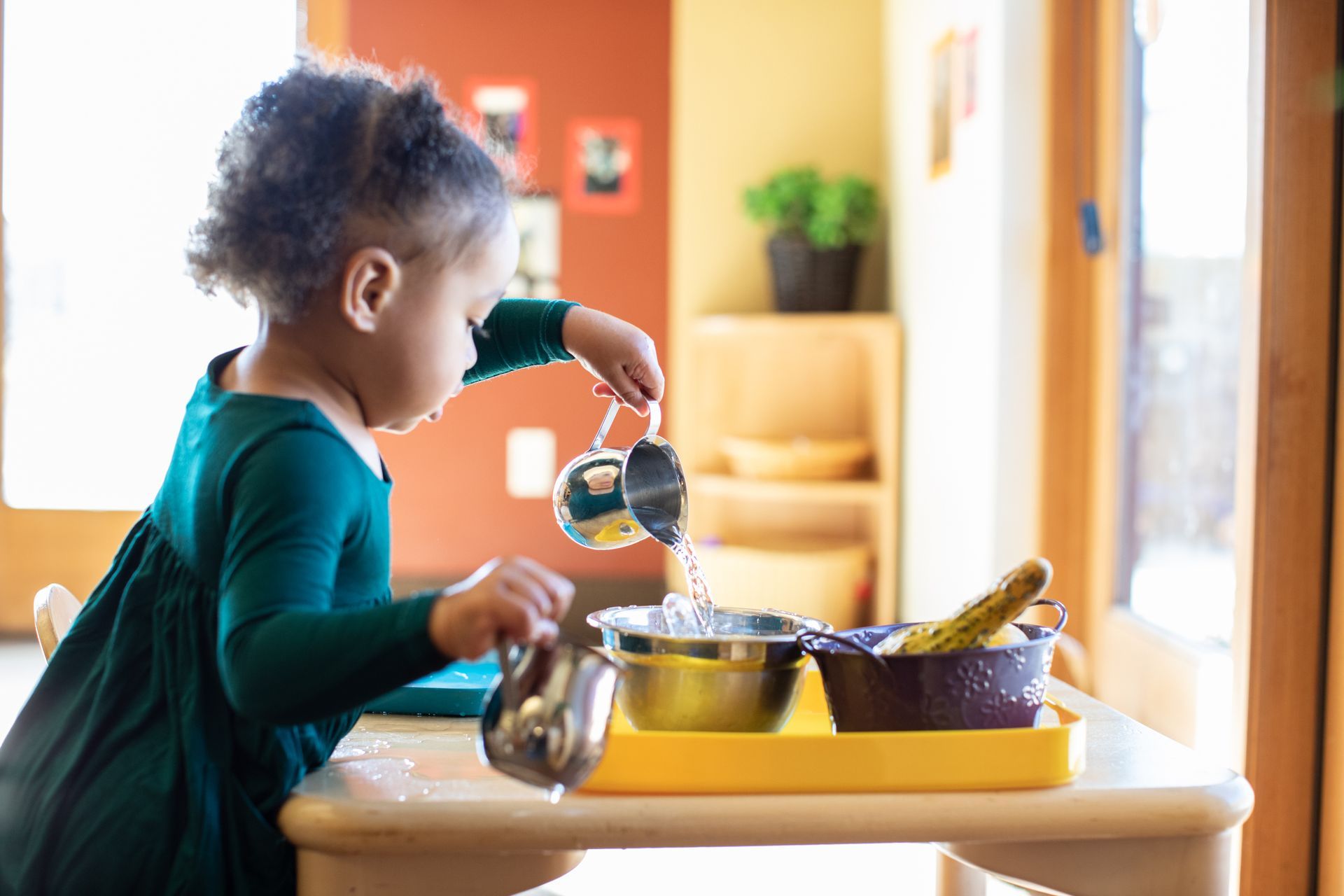
- Watering Plants: When the leaves are dry, children carry small pitchers to water them.
- Sweeping & Mopping: When dirt or a spill occurs, children use child-sized brooms or mops to restore order.
- Scrubbing Tables: When a workspace is dirty, children gather soap, water, and brushes to wash it clean.
Because children are discovering how their actions directly impact their space, adults intentionally avoid re-doing a child’s work. If a table isn't completely spotless after a young child finishes, we honor their effort and leave it be. Swooping in to redo the work sends an unspoken message that their contribution wasn't good enough; instead, another child may naturally choose to scrub the table again later as part of their day.
From Personal Joy to Community Impact
When children first begin practical life tasks, they engage in them for the pure sensory satisfaction of the process—enjoying the creation of soapy bubbles or the motion of wiping the table.
Over time, this shifts into a deeper awareness of the community. They begin scrubbing a table not just for the bubbles, but because they notice it is dirty and want to make it clean for their classmates. Contributing to the greater good brings children immense, natural joy. While we gently acknowledge their contributions, we avoid excessive adult praise so children maintain their own intrinsic motivation and pride in their work.
Experiencing Natural Consequences & Genuine Responsibility
Care of the environment teaches children that their actions, or inactions, matter. If a classroom plant is forgotten and goes unwatered, it will eventually wilt. Experiencing these natural, tangible outcomes helps children understand accountability and builds deep pride in being capable, contributing members of their classroom.
Bringing Care of the Environment Home
Parents often ask how they can extend these Montessori principles into the home. Supporting your child's independence doesn't require elaborate preparation, just thoughtful access to everyday tools:
- Set Up Low Access: Provide low shelves for toys, an accessible drawer with items for setting the dinner table, or a low hamper for dirty clothes.
- Slow Down and Isolate Steps: While adults complete household chores on autopilot, young children are still mastering their physical movements. Take time to slow down, break down the task, and clearly show each step of the process.
- Offer Real Roles: Invite your child to wipe down low counters, water houseplants, or assist with food preparation.
Through meaningful daily work, children discover their own capability and significance, building a peaceful foundation of self-confidence that lasts a lifetime.