Primary Class
Classroom age requirements: 3 years old through 6 years old
Mornings (offered for children ages 3 & 4 years old):
- Monday through Thursday 8:30 a.m. - 11:30 a.m.
- Monday through Friday 8:30 a.m. - 11:30 a.m.
School-Day (Available for children ages 3 & 4. Required for Kindergarten year):
- Monday through Friday 8:30 a.m. - 3:15 p.m.
The Primary class is truly a gift to your child. Designed for children between the ages of 3 to 6 years, it is an opportunity to nurture his individual development within the context of a group setting at our Montessori primary class. The result is having self-confidence, joy, and a lifelong love-for-learning.
Curriculum overview:
Peaceful Pathways Montessori's Primary class offers each child an environment to begin practicing what it means to be a citizen. The mixed age classrooms allow children to learn from and help one another as they progress from being a novice to becoming a mentor.
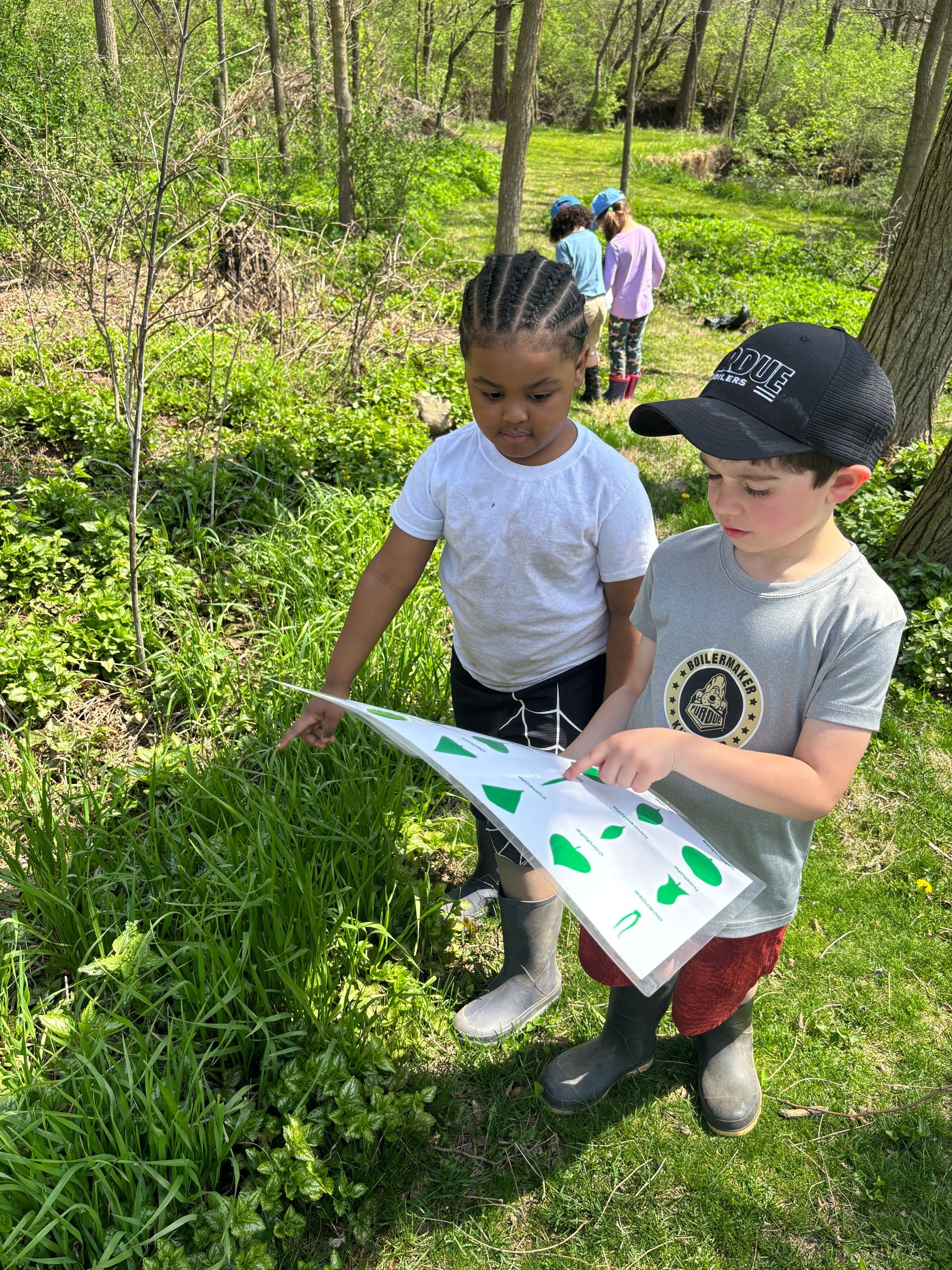
Children work in small groups or independently and receive direct instruction from their teachers in ratios from three-to-one to one-on-one. This provides each student unparalleled opportunities to advance through curriculum at their own and optimal pace. Children in our primary classrooms learn to read, write, understand math concepts, and explore science, history, music, art and enjoy outdoor time.
In a P.P.M.A. classroom, academic learning occurs in situations that allow the necessary freedom and accountability to help young children build the qualities of character that are necessary for success in both school and in life. Every day offers limitless life “practice”, whether it is through learning fractions or having the privilege of offering a snack to fellow classmates at Peaceful Pathways Montessori Academy.
Grace and courtesy are encouraged and consistently reintroduced to the children. These lessons include: how to interrupt, what level their voice should be, the steps of a work cycle, how to push in a chair, how to roll a mat, how to welcome a visitor, how to solve conflicts, how to sit on line, and how to greet others. Grace and courtesy is essential to ensuring a smooth work cycle and sets the framework of a successful working Montessori classroom.
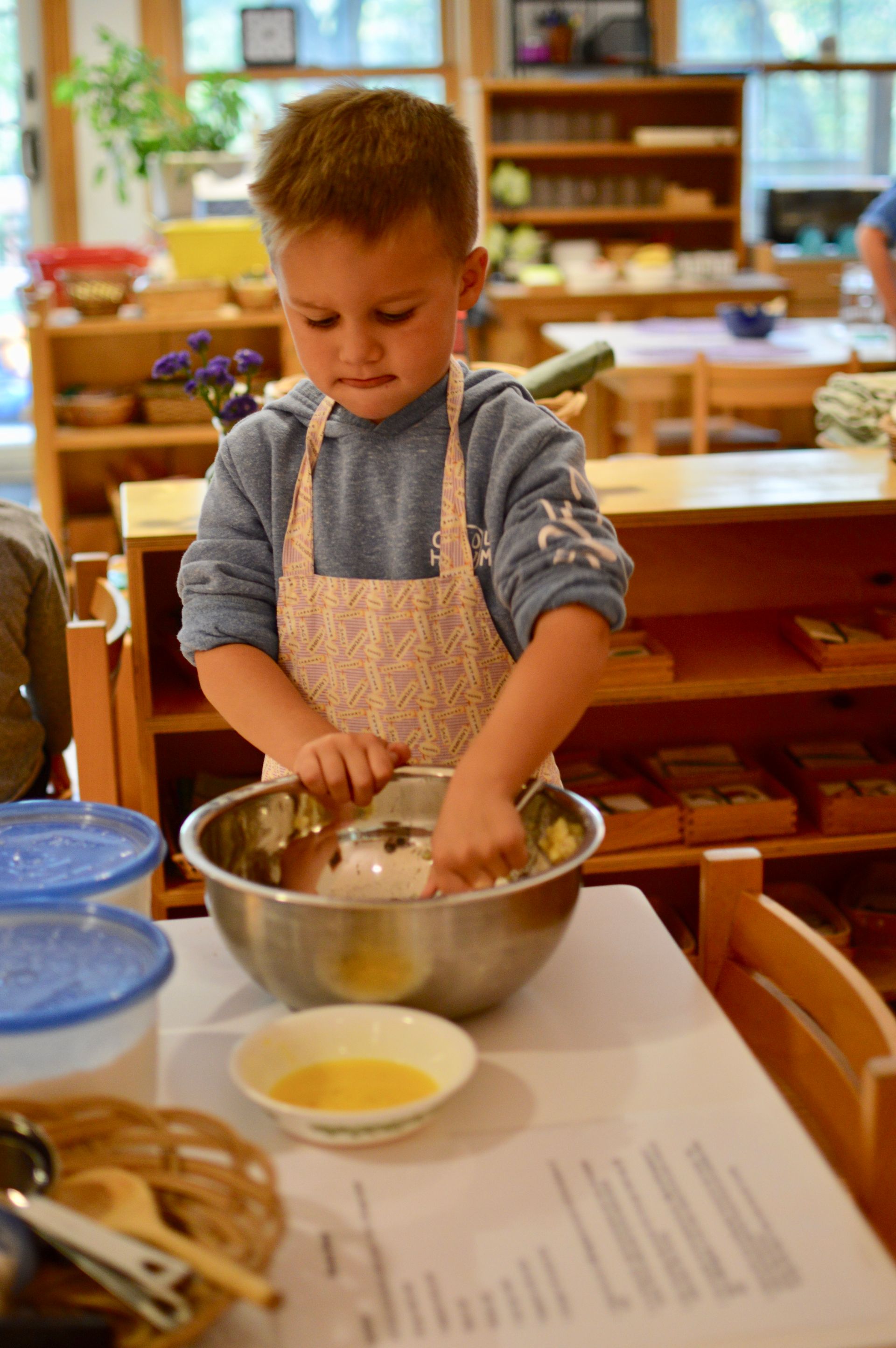
Practical life prepares the child for life. It is the foundation of the Montessori environment and nurtures the needs of the early childhood student. The four main goals in practical life activities: order, concentration, coordination, and independence.
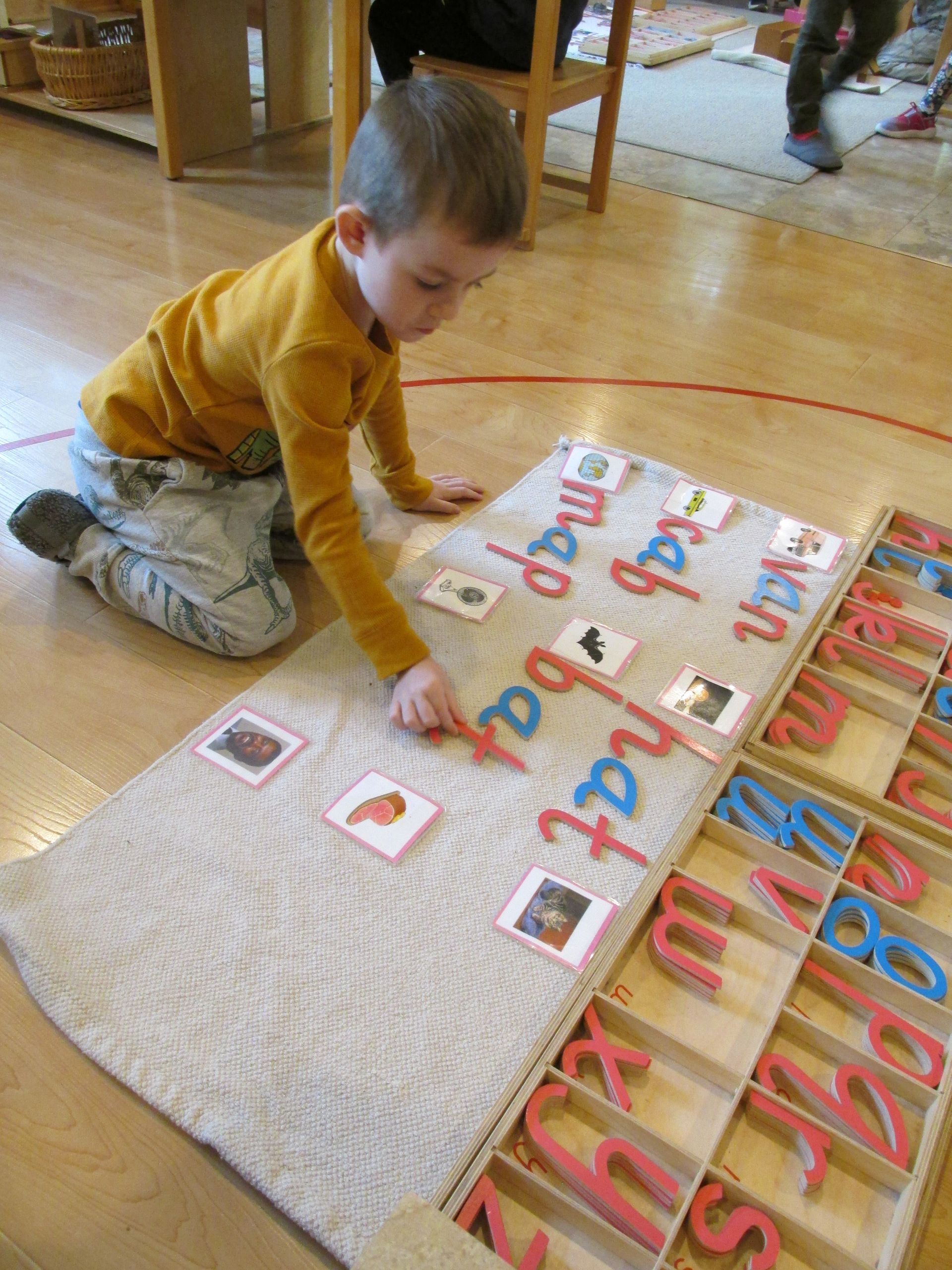
Children learn through their senses. The sensorial materials train and sharpen the senses of the child and bring awareness to learning in other areas. Through practice with the sensorial materials, children learn to discriminate between sizes, shapes, colors, textures, smells with language woven throughout the sensorial lessons. Language activities build self-confidence by expanding the child’s vocabulary and ability to communicate thoughts more precisely.
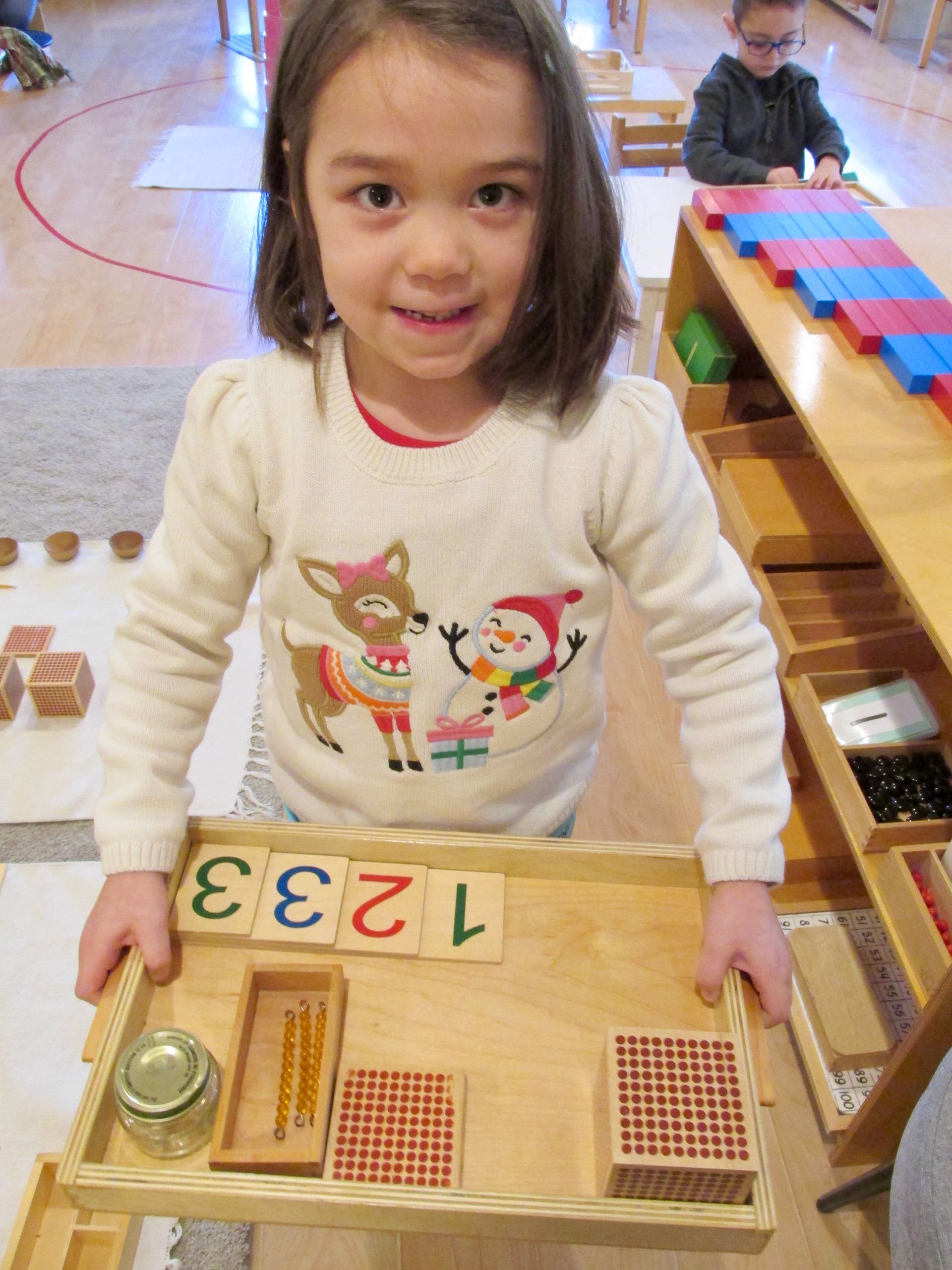
Montessori philosophy indicates that our ability to understand math can be sourced to our innate intelligence and the quality of the environment in which we are placed. Montessori practice begins with concrete experiences that will intrinsically lead to abstraction when the child is ready.
Geography, history and science are interrelated ideas and materials. The lessons are introduced with a leading question, then the child works with the materials and draws his/her own conclusions/inferences. The purpose of this work is to provide the children the opportunity to understand their own relationship to the planet within our Montessori curriculum.
Bible: Peaceful Pathways is non-denominational Christian Montessori program. Children are encouraged to explore God's world and hear how important God thinks each living thing is. We celebrate Christian holidays. Our Christian views are brought up spontaneously as they occur as well as in purposeful prayer each day at our Christian Montessori school in Yorkville IL.
FAQ's about our Primary Class
I have been a parent participating in P.P.M.A.’s program for two years now; and I have really enjoyed watching my children grow and become more independent thinkers and learners. I am confident in the development skills that they are learning; and I know that the educational and social skills, along with the classroom environment, are helping them develop into smart and assured individuals who have a desire for learning which will carry with them thorough all phases of life.
Our family decision to enroll our children in P.P.M.A. solidified as I began to research other toddler programs in the area and make site visits to the local educational establishments. Once I visited P.P.M.A., and met with the Head of School in addition to touring the Toddler classroom, I knew this was the environment where my child would grow the most; and not only be taken care of developmentally, but physically and emotionally as well. After the school visit, I researched the Montessori educational approach and I became more passionate about the program. I’m thankful to have found a school that goes above and beyond to teach by not just a one sided approach, but rather to connect with one’s child based on where they are in development and life. I wish I had been raised with the Montessori education approach, and I am eager to share with friends and family all of the wonderful benefits and blessings it has provided.