

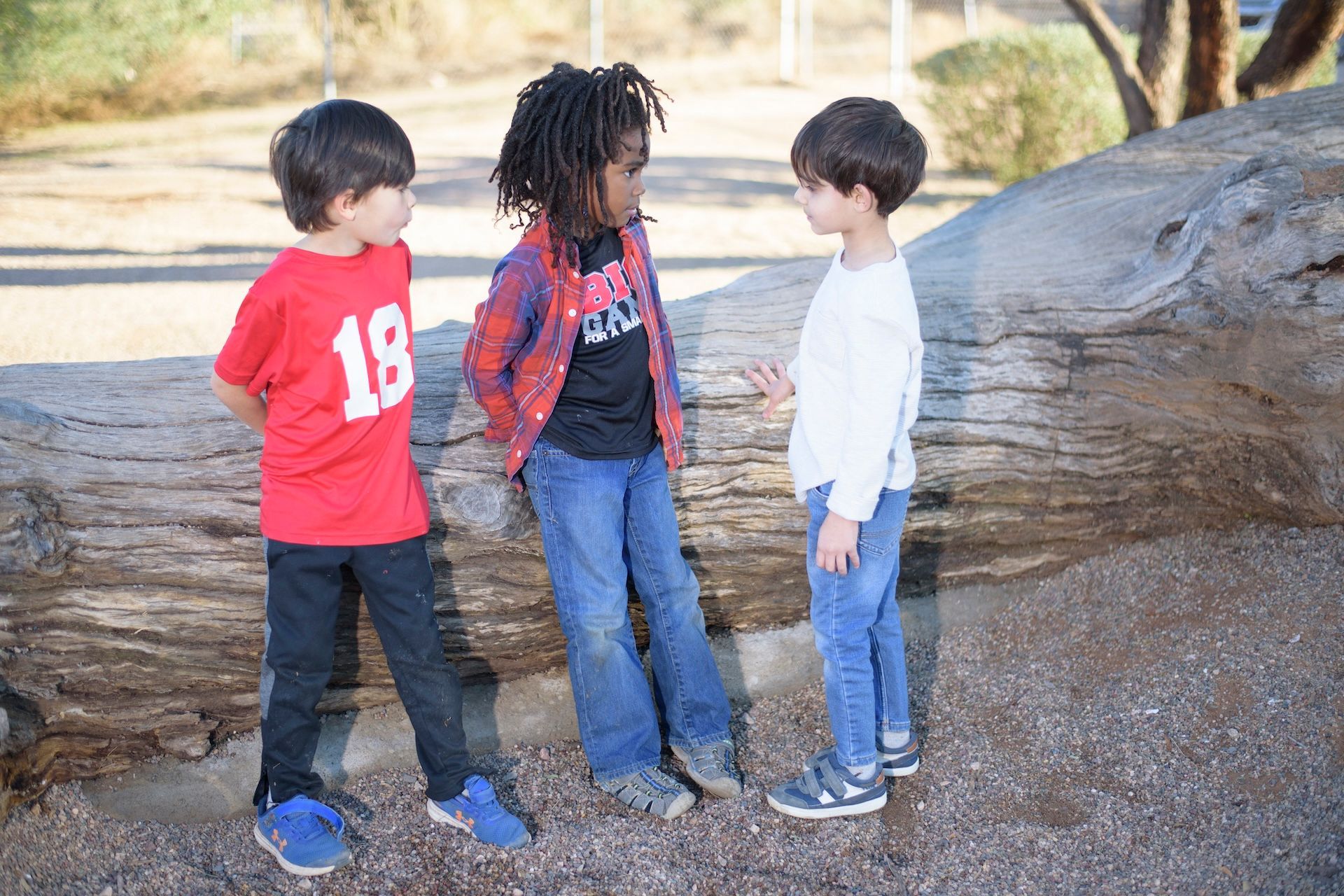
Nurturing the Whole Child: How Montessori Balances Emotional, Social, and Cognitive Growth
November 1, 2024

One of the gifts of Montessori education is that we can truly focus on the whole child —cognitive, social, emotional, and physical. Our approach is not just about academics but also about nurturing life skills, emotional intelligence, and social relationships.


The Montessori approach to child development revolves around the understanding that children are naturally curious, care deeply about others, and can be intrinsically motivated. When provided with the right environment, children can deepen both their love for learning and their appreciation of and care for the community. 


Prioritizing the Prepared Environment


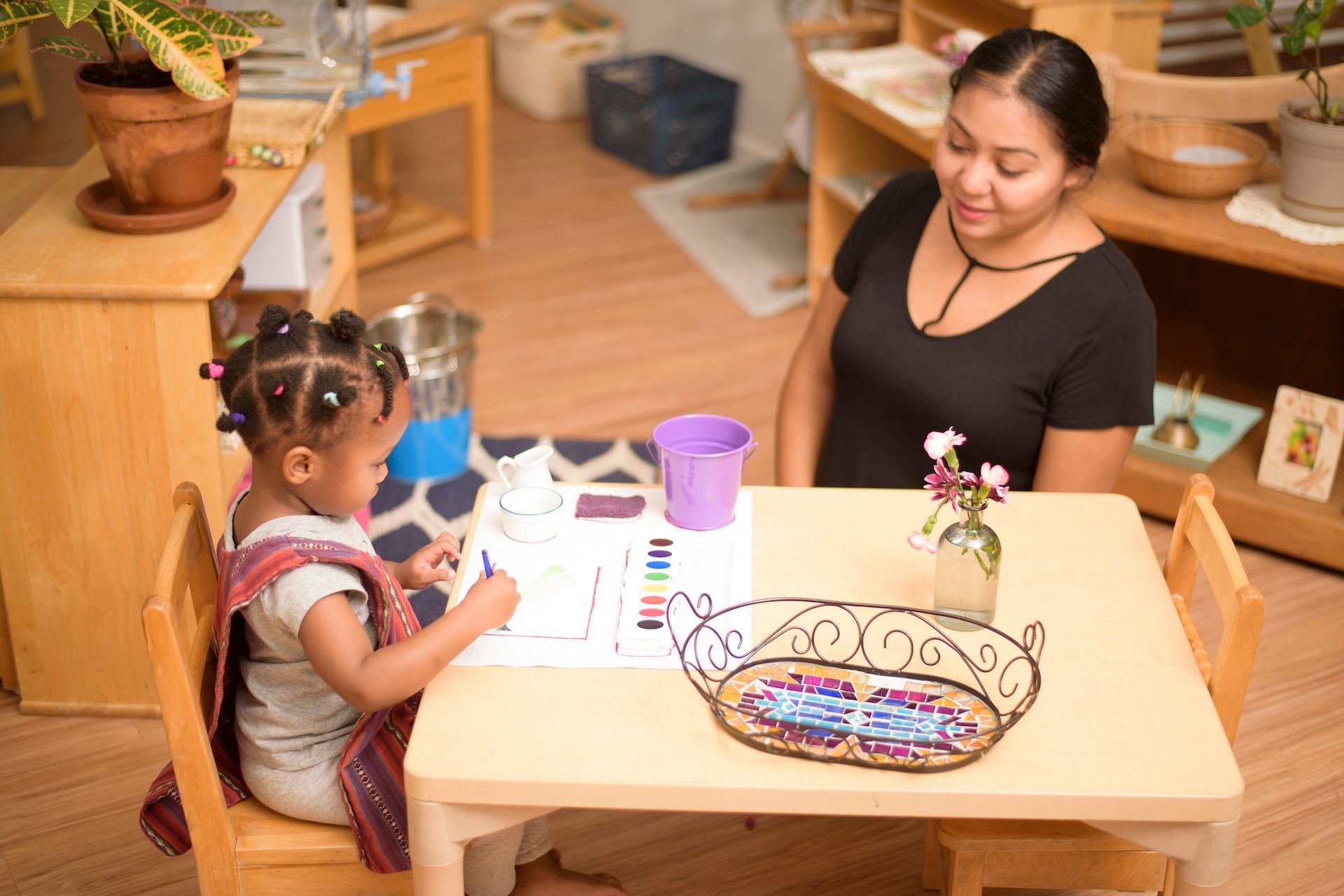
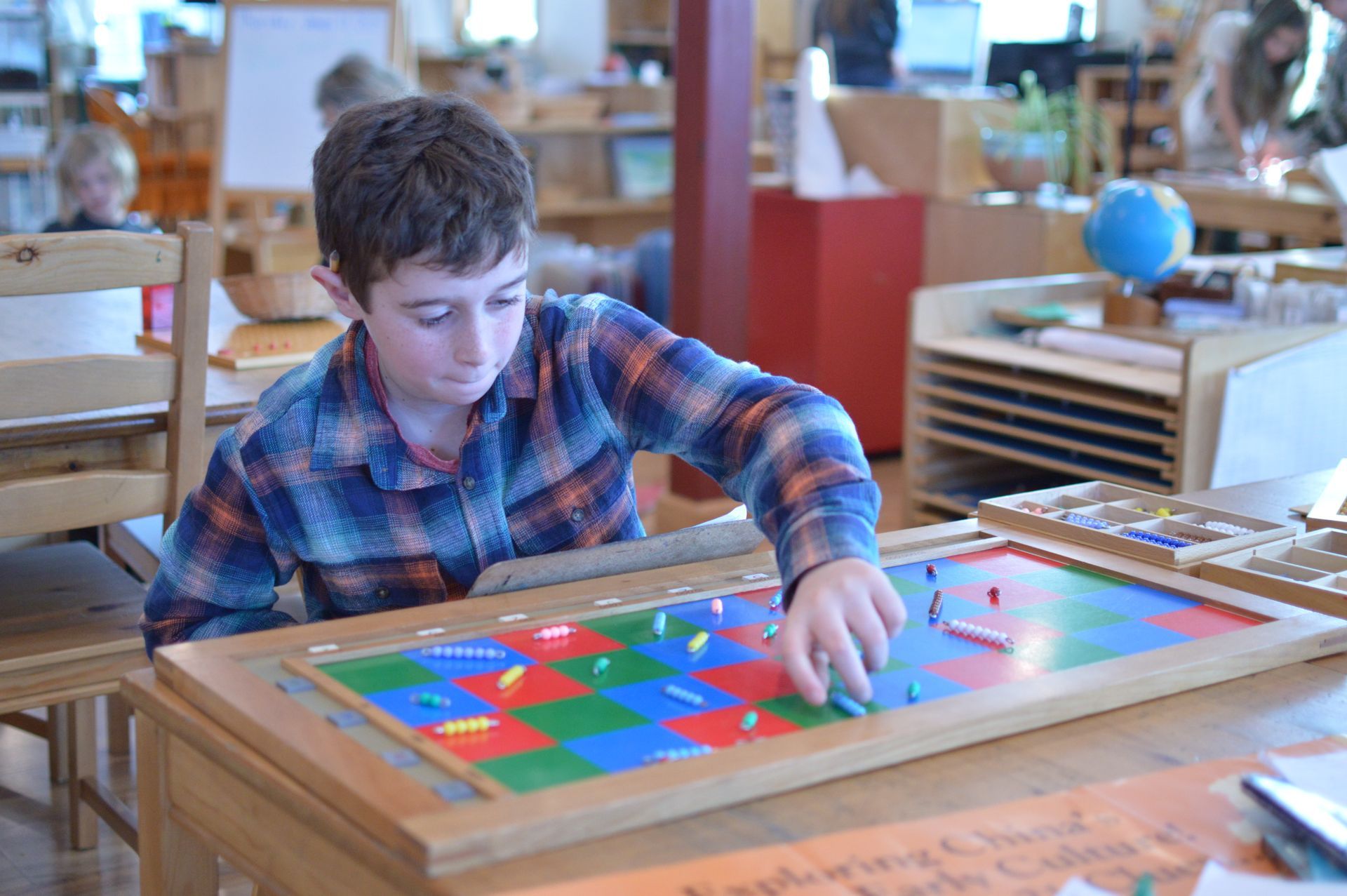
One of the keys to balancing social-emotional learning with cognitive and physical development is prioritizing the impact of a prepared environment. In Montessori, a prepared environment is a place specially designed to appeal to children’s sensitive periods for learning, as well as their core human needs and tendencies. When designing these prepared spaces for children, we work to ensure children feel safe and supported so they can reach their potential. The Montessori-prepared environment is a place where children can feel at home as they develop their inner selves and outer skills.


Our carefully prepared Montessori classrooms are calm and orderly, foster independence and decision-making, and provide varied opportunities for peer interactions in mixed-age classrooms. The result is that children can develop their emotional regulation skills in child-centered spaces. 


Opportunities for Conflict Resolution


In addition, we weave in opportunities for conflict resolution. This means we actively model and support children as they learn to communicate their feelings through words. In addition to promoting self-awareness through identifying and naming emotions, we also teach active listening, problem-solving, and techniques for self-regulation (from deep breathing to using calm-down spaces).


Adults serve as mediators and guides rather than arbitrators and judges. Through guided discussions, we help children think reflectively about social interactions, practice respectful communication, facilitate peaceful solutions, and model how to handle conflict. Ultimately, we want to empower children with tools they can use even if an adult isn’t present! 


Respect for Others


One key to this is cultivating respect for others’ perspectives and patience for alternative approaches. Because children work together in a variety of ways through their care of the classroom environment and small group projects or lessons, they develop a deep sense of compassion and empathy. Our mixed-age groupings and peer-to-peer learning activities promote collaboration and mentorship. So, in addition to the adults, older children also serve as models of emotional regulation and conflict resolution for younger peers. The result is that Montessori children develop a deep tolerance for and appreciation of difference. 


Deep Appreciation for Community


Children thrive when they have a sense of community and belonging. So, we promote inclusivity and respect for diversity within the classroom. The Montessori curriculum includes a range of activities that encourage group cohesion and empathy-building, which leads to trust and respect among our students. 

The long-term benefits of Montessori’s focus on social-emotional learning and conflict resolution are that children develop lifelong social skills such as a deep sense of empathy, effective communication with various people, and the ability to cooperate with grace and goodwill.


The Montessori method nurtures social-emotional learning and equips children with essential conflict-resolution skills they can use in their classroom communities and social interactions outside of school.


Do you want to learn more and perhaps even support these practices at home? Schedule a visit today!

Teacher reading to seated children in a bright classroom circle time
By Gabriela León June 23, 2026
Of all the aspects of Montessori philosophy that raise eyebrows, the topic of fantasy and imagination might be the most misunderstood. Parents sometimes hear that Montessori discourages imaginative play, or that it takes a dim view of fairy tales and make-believe. The reality is both more nuanced and more fascinating than that. Dr. Maria Montessori didn't distrust imagination. Actually, she revered it! She was deeply interested in understanding how imagination develops and what kinds of experiences feed it most richly. Imagination Is a Force for Truth Dr. Montessori believed that imagination is one of humanity's greatest powers. It allows us to reach beyond what is directly in front of us, to envision what we cannot see, to understand what we cannot touch, and to create what does not yet exist. It is imagination, Dr. Montessori argued, that drives scientific discovery, artistic expression, and human progress. But here is the key insight: imagination doesn't grow in a vacuum. It grows from reality. The richer and more precise children's experience of the real world, the more powerful and genuine their imaginative capacity becomes. As Dr. Montessori wrote in The Absorbent Mind, "imagination is a force for the discovery of truth," not an escape from it. For this very reason, we fill Montessori classrooms with real objects, real experiences, and real information about the world. Wonder, to be truly nourishing, needs real and wonderful things from which to emerge. The Difference Between Child-Led and Adult-Imposed Fantasy One of the most important distinctions Dr. Montessori made is the difference between fantasy that children create themselves and fantasy that adults impose on them. When young children pick up a stick and pretend it is a horse or transform a cardboard box into a spaceship, they are using their accumulated knowledge of the real world to construct a creative, imaginary one. This kind of pretend play is entirely natural and valuable. The children are in control of the fantasy, and they know, on some level, that it is fantasy. What is more complicated is when adults introduce elaborate fictions as though they were real. When we encourage children to believe things that aren’t true, we are essentially presenting misinformation to minds that are actively trying to make sense of reality. Young children in the first years of life are working hard to understand what is real and what is not. And when they are uncertain, they look to trusted adults for guidance. When those adults confirm a fantasy as reality, children's natural process of distinguishing truth from fiction is interrupted. Dr. Montessori called this state credulity: a characteristic of the immature mind that hasn't yet developed the tools to distinguish the true from the false, or the possible from the impossible. The adult's role, she believed, is not to extend credulity but to gently support children in building accurate, grounded knowledge of the world. What This Looks Like in Practice It's worth pausing here, because this aspect of Montessori philosophy can feel startling at first, especially in a culture that places enormous value on the magic of childhood and the traditions that come with it. Families navigate this in different ways, and Montessori doesn't prescribe a single approach to handling holidays or family traditions at home. What Montessori does suggest is that children are far more capable of genuine wonder than we sometimes give them credit for, and that the real world, offered to them with beauty and depth, provides more than enough magic to satisfy even the most imaginative child. Dr. Montessori gave striking examples of this. She noticed how a simple chart showing the relative sizes of the sun and the earth left young children full of astonishment, and more astonished, she observed, than any fairy tale had managed to make them. The actual scale of the universe, presented clearly and beautifully, opened something in their minds that no invented story could have reached. As she wrote in To Educate the Human Potential, by offering the story of the universe, "we give him something a thousand times more infinite and mysterious to reconstruct with his imagination, a drama no fable can reveal." Similarly, Dr. Montessori noted that children are often far more satisfied when they can engage with the real version of something rather than a pretend substitute. Washing real dishes rather than toy ones. Riding a real horse rather than a stick. Using a globe to find America rather than hearing it mentioned vaguely in conversation. The real thing, it turns out, is often more engaging, not less, than the pretend version. Reality as the Launchpad This is perhaps the most beautiful way to understand the Montessori approach to imagination. Reality is not the opposite of imagination. It is its launchpad. When children have rich, precise, hands-on experience of the world — through sensorial materials, through nature, through meaningful work, through real information about science, history, and the cosmos — their imagination has something extraordinary to work with. They can envision what they cannot see because they understand what they can. They can reach toward the abstract because they are grounded in the concrete. As Montessorian Sarah Werner Andrews described it, the development of imagination begins with children's understanding of how the real world works. And far from being an immature stage that children grow out of, this grounded imagination is "the entry into the uniquely human, lifelong capacity to imagine alternatives to reality." In other words, Montessori isn't asking children to imagine less. It is giving them everything they need to imagine more — more vividly, more truthfully, and more powerfully — for the rest of their lives. In Part Two of this series, we'll explore exactly how the early childhood materials build that foundation, and what happens to imagination when children carry it into the elementary years. 
Child painting at a table in a cozy home, focused on colorful artwork.
By Gabriela León June 16, 2026
With the slower pace of summer, more time at home and outdoors, and more unstructured hours to fill, it’s a perfect time to pull art supplies out fo the closet, cover tables with paper, and unleash some creative energy! What happens in these creative moments matters more than most of us realize. And how we respond to what children make matters just as much as the making itself. The Process Is the Point A foundational principle behind Montessori's approach to children's artmaking is that the process of making art is far more important than the product. This can be difficult for us to internalize, because the product is what we most often see. It’s not that we don’t care about our children’s experience. But the painting is what comes home. The drawing gets taped to the refrigerator. We get handed the collage at pickup. So it’s natural to focus on what is right in front of us. But it is the moments when children are deeply absorbed in moving paint across paper, pressing clay between their fingers, or scribbling long, looping lines with a crayon that something essential is happening. This is a deep form of creative expression and an outlet for feelings children may not yet have words for. Plus, children are developing visual-spatial skills, fine motor coordination, and the capacity for innovative thinking. During art-making, children are problem-solving in real time, making decisions about color, form, pressure, and space. And they are experiencing the deep satisfaction of following an internal creative impulse all the way through to its end. What Not to Say and What to Say Instead One of the most important things we can do to support young children's creative process is to be thoughtful in our comments. Even well-meaning responses can shift children's focus from their own inner experience to an adult's reaction. Once that shift happens, children begin making art for the audience rather than for themselves. Comments like, "That's beautiful!" or "What is it?" or "Can you make one for Grandma?" are all, in different ways, asking children to produce something for someone else or to explain and justify what they've made. Neither of these supports genuine creative development. Instead, focus on objective, process-focused observations. For example, "I can see you used a lot of green and purple today," or "Your lines extend all the way to the edge of the paper," or "It looks like you really enjoyed making that." These responses acknowledge children's work without judging it, and they communicate that what they made matters, and what they experienced while making it also matters. Young children often cannot (and should not have to) explain their art. The experience of making art is enough. A Summer Opportunity: Freedom to Explore Summer is an ideal time to offer children a real variety of creative materials and the freedom to choose what calls to them. Different children will be drawn to different media, and what each child gets from a new experience will be entirely their own. Variety is important precisely because it sparks different kinds of interest and expression in different children. Here are some starting points for summer art exploration, appropriate for toddlers and young children: Offer crayons and large paper for open-ended scribbling and mark-making. It’s best to begin by offering large spaces before moving to smaller ones. Large paper means that children's bodies have room to move freely. Easel painting or watercolors offer the joy of color mixing and the experience of a brush moving across a surface. Play-dough and clay can satisfy children's deep need to manipulate, press, and build with their hands. Collage materials (paper scraps, leaves, fabric, natural objects) invite children to arrange and compose in ways that feel both free and purposeful. Chalk on pavement (or dark paper, if the weather isn’t cooperating) is especially magical outdoors on a summer morning. From a practical standpoint, it’s helpful to protect clothing and surfaces before beginning, so children can work freely without worry (theirs or ours!). Choose non-toxic materials, particularly for the youngest children who may still explore things with their mouths. And resist the urge to direct the outcome. Children who cover their paper entirely in black paint are not doing it wrong. They are doing exactly what they need to do. What to Do With What They Make Not every piece of art needs to be saved or displayed. Saving a selection of artwork from across the summer (early pieces, middle-of-summer pieces, late-summer pieces) can serve as a timeline or record of your children's creative development and a meaningful way to look back together at the end of the season. If there isn’t room to display selected pieces, a simple folder or large envelope can also work perfectly for this. When you look through the artwork together, let your child lead the conversation or simply look at it together without words. The goal is never gallery-ready products. The goal is children who trust their own creative impulses, who feel free to experiment and make a mess and start over, and who carry the confidence of someone who has been allowed to make things in their own way. Summer is long, and the canvas is wide! Let children fill it however best suits their needs! We'd love to hear how your family is spending the summer months. And we always love to share how we support creative exploration in our prepared environments in our school. Contact us to learn more!