

Montessori’s Living Curriculum: Biology in the Classroom & Beyond
July 16, 2025

What is biology? At its root, the word comes from the Greek bios, meaning "life," and logos, meaning "word" or "reason." In short, biology is the study of life. In Montessori elementary classrooms, however, biology is more than a science subject—it’s a gateway to wonder, connection, and understanding our place in the larger story of life on Earth.


A Living Subject in a Living Curriculum


Dr. Maria Montessori saw biology as essential to what she called Cosmic Education—a curriculum designed to help children in the second plane of development (ages 6 to 12) see how everything in the universe is interconnected. In this context, biology is not just about memorizing facts. It’s about discovering how plants, animals, water, minerals, and even the air work together in a grand collaboration. Through this lens, we can discover how each species has a cosmic task—a unique role in sustaining life on Earth.


Plants, for example, draw minerals and water from the soil, but they also protect that soil from erosion and help purify the air. Animals depend on plants for food and, in turn, help pollinate, fertilize, and spread seeds. Each element takes what it needs and gives something back. In a Montessori classroom, children explore these ideas deeply, not just as scientific facts, but as part of a moral and ecological awareness.


The Importance of Real Experiences


Montessori elementary children are imaginative, curious, and developing a strong sense of morality. They want to understand how things work and why they matter. That’s why biology in Montessori isn’t taught from a textbook—it’s brought to life through real experiences and thoughtful exploration.


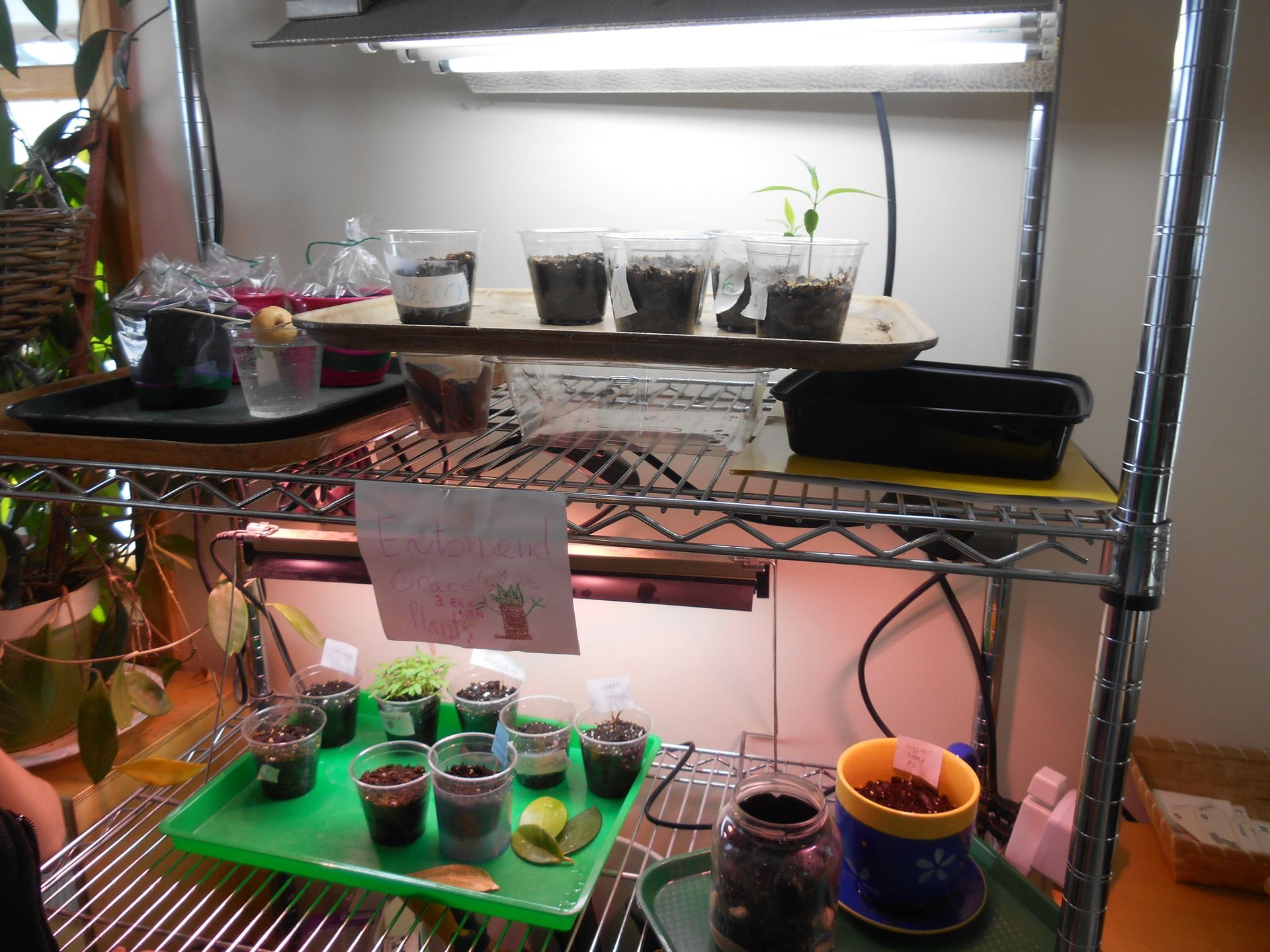
Whenever possible, we begin biology lessons with real specimens. A single seed, a fallen leaf, or a live plant offers more opportunities for engagement and connection than a picture ever could. Children are encouraged to observe, touch, ask questions, and form hypotheses. We may use sketches and charts to aid understanding, but hands-on exploration always comes first.


Children examine the parts of a flower, experiment with how different leaves respond to light, or observe how water travels through a stem. Along the way, they learn the functional anatomy of plants and animals, explore systems of classification, and begin to understand adaptation and evolution.


Moral Considerations in Science


Because elementary-age children are developing a sense of right and wrong, we take care to present biology with sensitivity and respect. We don’t cut living plants carelessly or keep animals for the sake of experimentation. Instead, we invite questions: Is it right to dissect a flower? What happens when we keep a bird in a cage? How does using pesticides affect bees and flowers?


These questions encourage children to develop empathy, a sense of stewardship, and a respect for life. It’s not just about learning how living things function—it’s about understanding our responsibility within the web of life.


A Dual Environment: Classroom and Nature


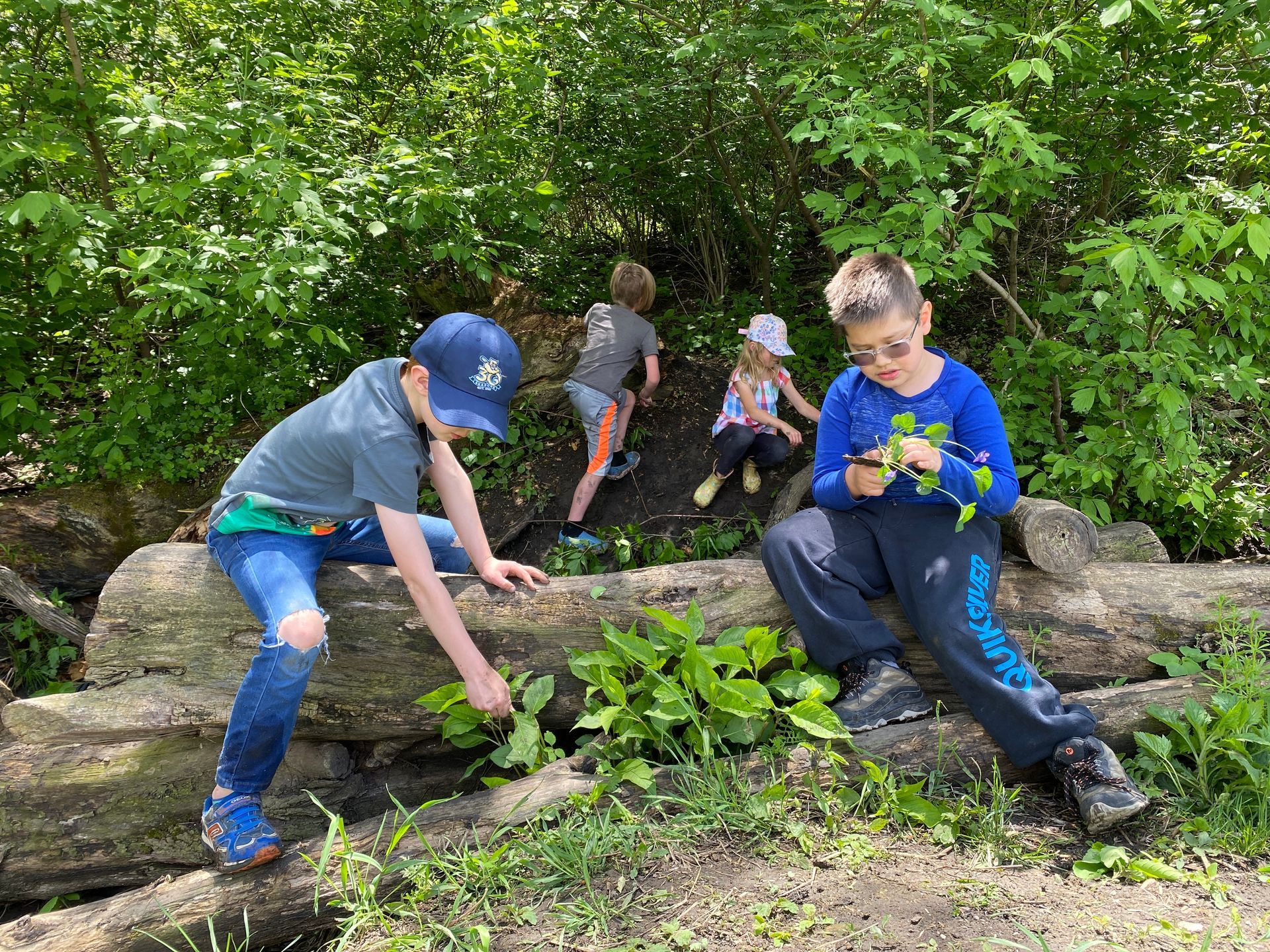
One of the most important aspects of biology in Montessori is that it happens in two environments: the classroom and the natural world. Children study parts of a plant in class, then go outside to identify those parts in a garden or forest. They may observe a classroom pet or bees coming to planter boxes, then learn about insect behavior and classification. This dual environment deepens understanding and builds connection.


When in Kodaikanal, India, Dr. Montessori experienced how elementary children learned by exploring hills, forests, and fields. At Peaceful Pathways Montessori we are blessed to have six acres filled with life! Biology surrounds us and allows our elementary students to have many experiences studying living organisms both in the classroom and outdoors.


How Families Can Support a Love of Biology and Nature


As parents and caregivers, we are our children’s most important guide to the natural world. And the good news is, we don’t need to be a biology expert to nurture a deep love of life sciences. Here are some simple ways we can provide support:


  • Go outside often. Whether it’s a walk around the neighborhood, a hike in the woods, or just time in the backyard, give children plenty of opportunities to observe and wonder.
  • Make collections. Children love collecting things—leaves, rocks, feathers, shells. Encourage this instinct, and use it as a way to ask questions and spark further research.
  • Model curiosity. If your child asks why some plants grow in the shade or why certain animals come out at night, don’t feel pressured to have the answer. Say, “I wonder that too. Let’s find out together.”
  • Create a nature journal. Encourage children to draw, label, and write about what they see in nature. This can be as formal or informal as they like. The goal is to create a habit of observation.
  • Ask big questions. Children love the extraordinary. Ask them what they think about camouflage, desert survival, or why birds migrate. Their imagination and reasoning will shine.
  • Use your interests. If you love gardening, birdwatching, or hiking, share that with the children in your life. Even your casual observations can spark their own questions and investigations.


From Biology to Ecology


As Montessori children grow in their biological studies, they naturally move toward ecology—the study of how all living and nonliving parts of the world interact. This final synthesis reinforces their understanding that they are part of something bigger, something intricate and beautiful.


Ultimately, biology in Montessori is about more than life sciences—it’s about living fully, attentively, and respectfully in the world. With a nurturing classroom, a natural world to explore, and the guidance of engaged adults, our children can grow up with a profound sense of connection, wonder, and care for the Earth.
By Gabriela León July 7, 2026
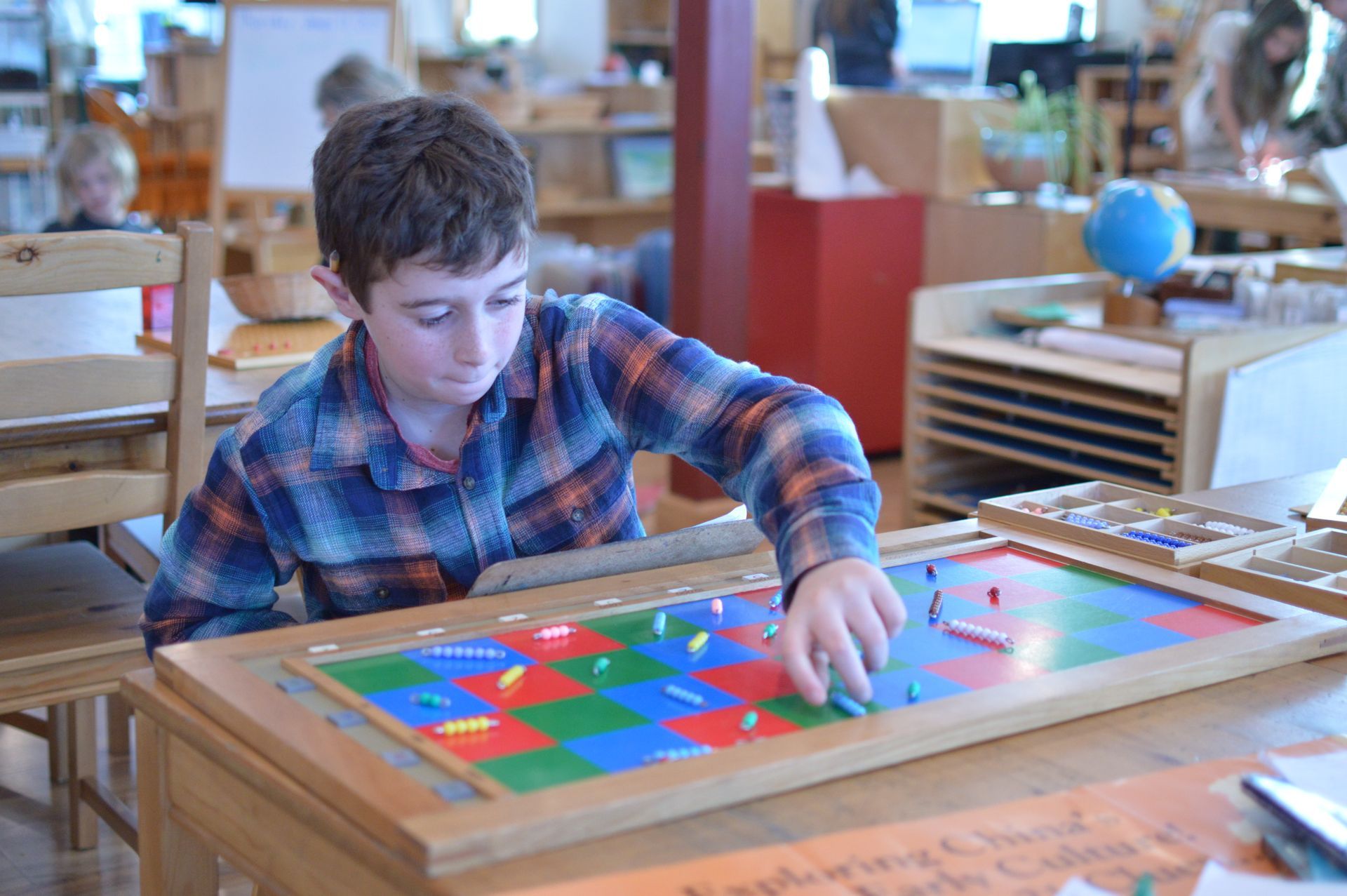
Montessori geography materials help children explore the world through hands-on learning, imagination, and real-world discovery.
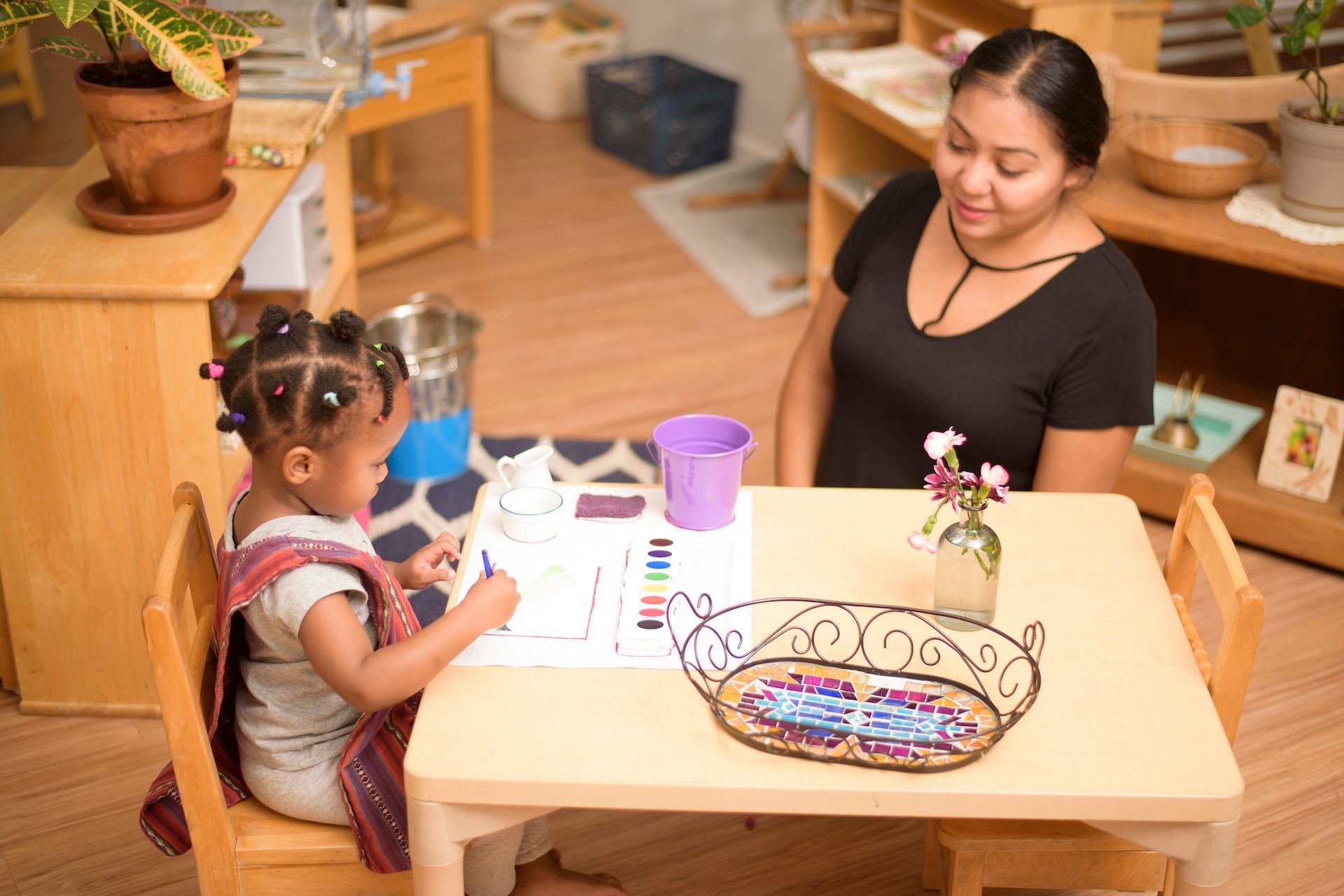
Child drawing on paper at a classroom table with art supplies and picture cards spread out.
By Gabriela León June 30, 2026
In Part One of this series, we explored Dr. Montessori's profound belief that imagination is nourished not by fantasy alone, but by reality. The richer children's concrete experiences of the world, the more powerfully their imagination can soar. In Part Two, we look at how this actually unfolds: how the carefully designed materials of the early childhood classroom lay the groundwork for the extraordinary imaginative life of the elementary-aged child. What the Youngest Children Are Really Doing Watch young children in a Montessori classroom, and you might see them tracing the edges of a triangle with their fingertips, testing objects to compare dimensions, fitting puzzle pieces of the continents together, or carefully moving golden beads that represent units, tens, hundreds, and thousands. These activities look deceptively simple. But something of tremendous importance is happening beneath the surface. These children are building the architecture of their minds. Dr. Montessori was clear about where all thinking begins: "There is nothing in the intellect which was not first in the senses." Before a child can think abstractly, before they can imagine what they cannot see, they must first have a rich, precise, embodied experience of the world around them. The sensorial materials of the Children's House are designed to provide exactly this. They train children's powers of observation, sharpen children’s ability to notice distinctions, and lay down a concrete mental structure that will serve children for the rest of their lives. Precision as the Foundation for Possibility This emphasis on precision might seem at odds with imagination, but in Montessori, it is the very source of it. As Dr. Montessori wrote in The Advanced Montessori Method, "If the true basis of the imagination is reality, and its perception is related to exactness of observation, it is necessary to prepare children to perceive the things in their environment exactly, to secure for them the material required by the imagination." In other words, the more accurately a child can see and understand the real world, the richer they can imagine beyond it. Consider geometry. When a young child explores geometric shapes and solids with their hands, by touching edges, rotating forms, and fitting pieces into matching frames, they are not simply learning shapes. They are building a sensory foundation from which, years later, they might begin to conceptualize the support structure of a bridge, understand the geometry of navigation, or envision architectural forms that don't yet exist. The hands-on work of early childhood quietly becomes the creative capacity of the older child and the adult.  The Bridge Into the Elementary Years Something significant shifts around age six. Children who spent years absorbing concrete impressions of the world now begin to hunger for something more. They want to understand not just the things in front of them, but the larger story: how those things came to be, how they connect, what lies beyond the visible horizon of their direct experience. The emergence of the reasoning mind and the explosive growth of the imagination are the hallmarks of the second plane of development. And these superpowers emerge because of everything that came before. The child who handled the golden bead material in early childhood by counting and carrying hundreds and thousands, now has the concrete foundation to comprehend something almost unfathomable: the immense passage of geological time, from the formation of the universe to the emergence of human civilization, as depicted on the Montessori timelines and clock of eras. The quantities they once held in their hands now help them grasp epochs they can never directly touch. The concrete has become a gateway to the infinite. As Dr. Montessori described it in To Educate the Human Potential: "Imaginative vision is quite different from mere perception of an object, for it has no limits. Not only can imagination travel through infinite space, but also through infinite time; we can go backwards through the epochs, and have the vision of the earth as it was, with the creatures that inhabited it." When Imagination Starts from Reality, It Can Change the World There is powerful idea running through all of this, one that reaches well beyond education into the nature of human creativity itself. When imagination is untethered from reality, it tends to stay small or drift into what Dr. Montessori called mere speculation. But when imagination is rooted in genuine understanding, something transformative becomes possible. As she wrote: "When imagination starts from contact with reality, thought begins to construct works by means of which the external world becomes transformed; almost as if the thought of man had assumed a marvelous power: the power to create." This is the arc that Montessori traces across the first 12 years of a child's life. In early childhood, we give children the real world: carefully, beautifully, precisely. In the elementary years, children take that grounded understanding and begin to reach toward the cosmic, the historical, the abstract, and the creative. One stage makes the next one possible. And the imagination that emerges is not a flight from reality, but its highest expression. What We Can Take From This The Montessori environment makes so much sense when we think about this developmental progression! The sensorial materials are not busy work. The real objects are not a rejection of play. The carefully prepared lessons are not limitations on creativity. Each of these things builds minds that are grounded, precise, and curious enough to one day imagine things the world has never seen before. Dr. Montessori always believed that the child holds the future within them. The work of the classroom (and of the family) is simply to give that future the richest possible foundation from which to grow.