

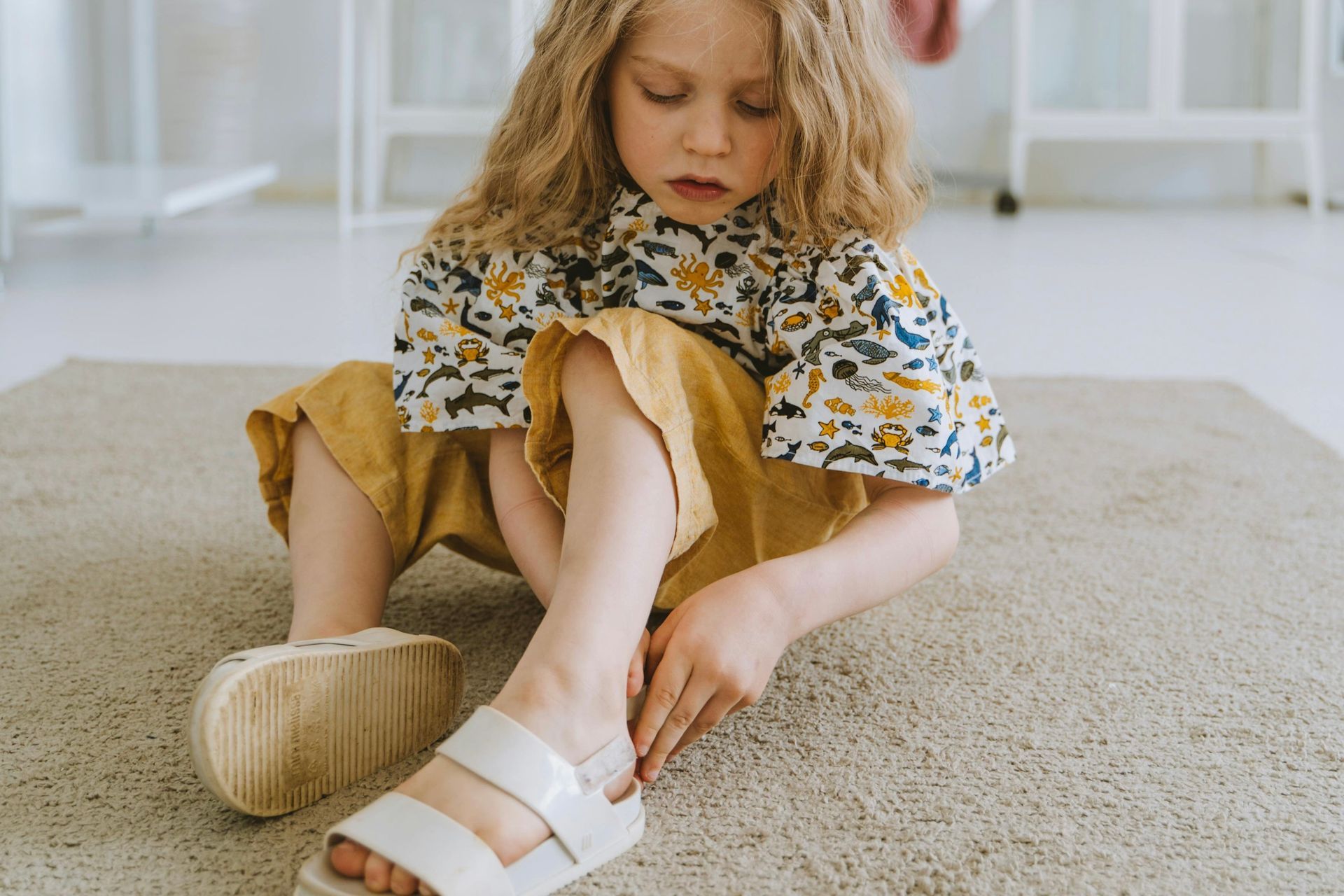
Slow Down and Let Them Try: A Montessori Approach to Self-Care This Summer
Gabriela León • June 9, 2026

Summer has a rhythm that the school year rarely allows. Mornings without a clock ticking. Afternoons that stretch and meander. The unhurried pace of days that don't need to be anywhere quite so urgently. And tucked inside all of that spaciousness is one of the most valuable gifts the season can offer young children: time to do things for themselves.


In Montessori, we don’t rush through the practical life activities that help children care for their own bodies: washing hands, dressing, brushing hair and teeth, wiping a nose, and putting shoes away. We don’t even think of these as chores because they are among the most important developmental work in our children’s early years. And summer, with its slower tempo, is the perfect season to lean into them.


Independence Is the Destination and the Journey


Dr. Montessori understood that, from the very first moments of life, children are moving toward independence. The newborn who moves toward the breast has already taken a first step. That milestone transforms the toddler who learns to walk: their hands are suddenly free, they can move toward or away from people and objects in their world, and they can begin actively shaping their own experience rather than merely absorbing it.


Every act of self-care that children learn to do for themselves is another step along this path. Not because independence is about doing things alone, but because the child who can care for their own body develops a sense of genuine capability, a trust in themselves, and a growing understanding of who they are as unique human beings.


As the Montessori principle goes: Help me to do it myself.


Collaboration Before Independence


One of the most important things to understand about supporting self-care in young children is that the path to independence moves through a collaborative process. Often, things go awry when we swing between getting caught up in instruction, resorting to doing something for them, or stepping back entirely before they are ready.


The progression looks something like this: first, we do the activity with or for the child, using gentleness and narration, so the child is always a participant, even before they can act. "I'm going to put on your shirt. Let's put your arm through the sleeve." Gradually, the adult and child do the activity together. Eventually, the child begins to imitate, then to do it in their own way, imperfectly, slowly, and with deep satisfaction.


This progression is not a straight line. There will be days when a child who has been dressing independently for weeks suddenly wants help again. This is entirely normal and simply calls for a gentle return to collaboration: "Let's do this together." Our goal is always to offer just enough support and no more. We want to find the balance between honoring children's need for assistance and protecting their emerging sense of capability.


What Summer Makes Possible


The school year, for all its richness, is often defined by time pressure. Mornings, especially, can become a sequence of things that need to happen faster than children can manage them independently. Shoes get put on by adults. Jackets get zipped by adults. Hair gets brushed quickly and without much ceremony.


During the summer months, there is often more space to let a three-year-old button their own shirt, however long it takes. There is time to stand back and watch a toddler figure out how to pull on their own socks. There is room for the unhurried back-and-forth of teaching a child to wash their hands properly, step by step, at a sink they can actually reach.


If we think of these moments as children’s real work, we can avoid getting caught up in the sense that the process isn’t efficient! This is a long-term game. Our children are building their abilities and their internal sense of capability.


Practical Suggestions for the Summer Months


Here are a few ideas for bringing the Montessori approach to self-care into your home this summer:


Set up the environment for success. Small adjustments allow children to manage their own needs without regularly needing adult assistance. Perhaps place a step stool at the bathroom sink. Provide low hooks for towels and clothing. Create a low shelf for children to store their belongings.


Choose clothing that supports independence. Elastic waistbands, velcro shoes, and loose-fitting shirts can be respectful of children's current physical abilities. Children who can dress themselves feel capable.


Narrate without taking over. When a child is struggling with a button or a zipper, resist the impulse to fix it immediately. Try instead: "You're working hard on that. Would you like to try once more, or would you like some help?" This keeps the child in the driver's seat of their own experience.


Begin with larger movements, then refine. Just as with any practical life work, self-care builds from the general to the specific. Children learn to pull a shirt over their head before they learn to fasten buttons. They learn to remove their shoes before they learn to tie them. Follow your child's current capacity and build from there.


Move without talking; talk without moving. This Montessori principle helps us demonstrate a self-care activity most effectively. When showing a child how to wash their hands, do it slowly and silently, so the movement is fully visible. Then, separately, use words to name the steps. Children often find it difficult to simultaneously track our narration and demonstration.


Self-Care Activities Worth Practicing This Summer


Consider the range of self-care activities appropriate for our children. Do they include undressing and dressing, hand washing, brushing hair, brushing teeth, wiping the nose, and caring for shoes? What else would your child benefit from learning how to master? Your child can practice these skills gradually as part of the natural rhythm of daily life.


There is no hurry. There is no single right timeline. What matters is the collaborative attitude that underlies each interaction. The adult and child are working together. We honor children's participation. Our goal is always to help children come to know what they are capable of.


The Deeper Meaning


Dr. Montessori was clear that the destination of this entire developmental arc, across all four planes of development, all the way to young adulthood, is a person who can provide for themselves, take responsibility for their own actions, plan for their own future, and perhaps even support others on their own path toward independence.

It begins here with a small person pulling on their own socks or learning to wash their own hands, and in a summer that is long enough and slow enough to let them try.


We hope your summer is full of these quiet, meaningful moments. If you would like to learn more about honoring children’s journey toward independence, please schedule a visit to our school!

July 21, 2026
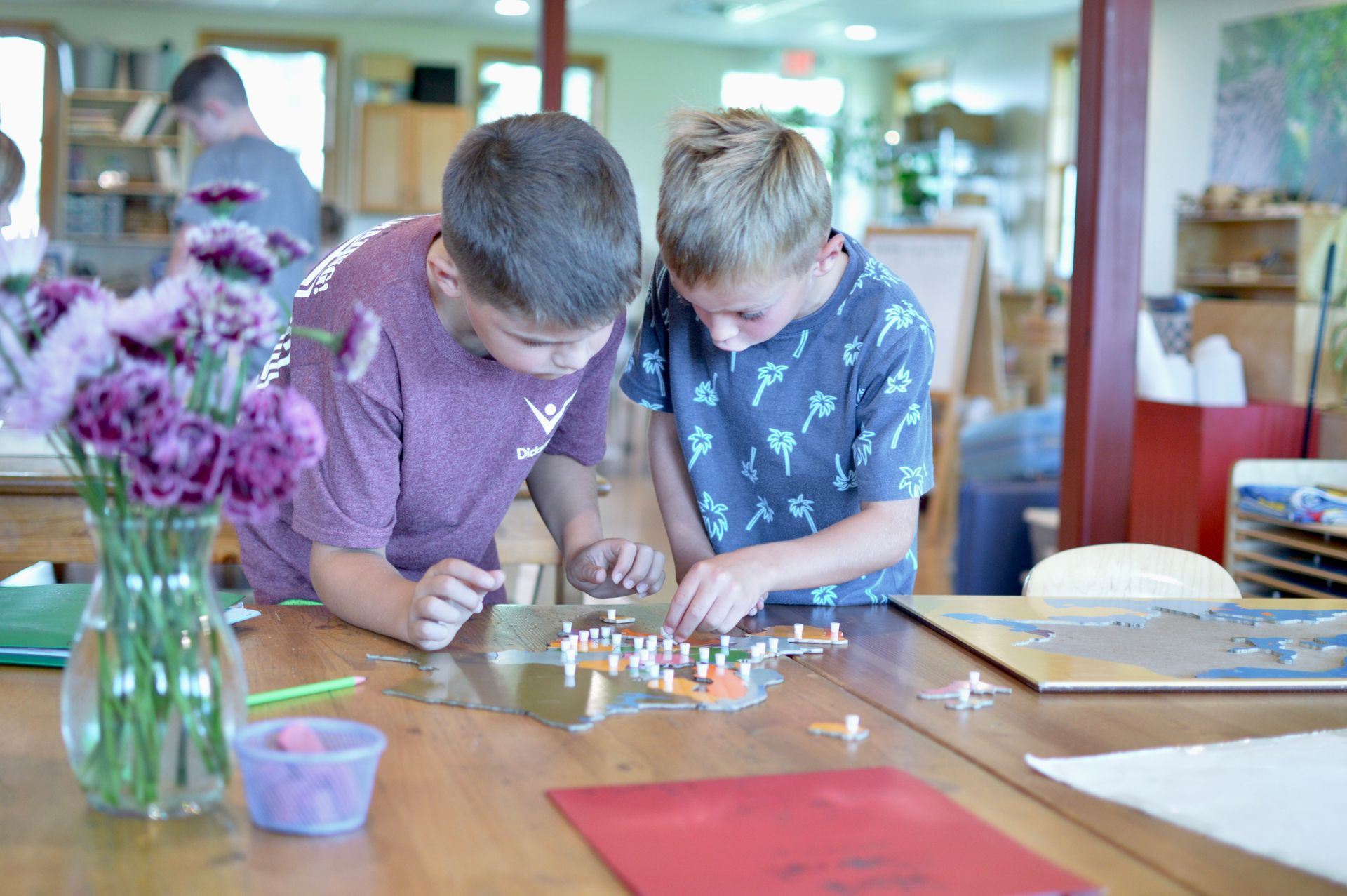
When most people think about what children need to thrive, they first think of the basics: food, sleep, safety, and love. Abraham Maslow described how fundamental needs (such as food, shelter, and sleep) must be met to satisfy higher spiritual needs, such as belonging, self-esteem, and self-actualization. What is perhaps less well known is that Montessori education builds on a very similar understanding of human nature and that we carefully design the prepared environment to meet not just children’s academic needs, but their deepest human ones. Dr. Maria Montessori wrote generally about human tendencies, and her son, Mario Montessori, reviewed her work to identify specific innate drives and needs shared by all of us, regardless of culture or era. These tendencies don’t change. They are part of what it means to be human. And when we give children an environment that honors and nourishes them, something remarkable happens: they begin to construct themselves from the inside out. As Christians, we also believe that children are created intentionally by God, with purpose, dignity, and unique gifts. Psalm 139 reminds us that each person is “fearfully and wonderfully made.” Children are not empty vessels waiting to be filled. They are whole human beings created in the image of God, already carrying within them the potential for growth, discovery, creativity, relationship, and wonder. The Need to Explore Every child is born with a drive to move, to discover, and to make sense of the world. This drive is a fundamental human instinct. As Dr. Montessori observed, the urge to explore isn’t simply about getting somewhere better. It is a primitive, vital impulse to engage with life. But exploration requires a foundation of security. When children’s environment is chaotic or unpredictable, they must constantly spend their energy simply reorienting themselves. Constant reorientation means they are expending energy on figuring out what’s where and what comes next, rather than on curious, joyful discovery. This is why we design Montessori classrooms with such deep intentionality. Materials are always in their place. The order is consistent and reliable. Within this predictable structure, children feel safe enough to truly explore, and through that exploration, they begin to develop an internal order that mirrors the order around them. Scripture reminds us that “God is not a God of disorder but of peace” (1 Corinthians 14:33). Children flourish in environments marked by peace, consistency, beauty, and purpose. In many ways, the prepared Montessori environment reflects these truths. It provides children with the freedom to explore within clear and thoughtful boundaries, helping them grow in confidence, independence, and responsibility. We also believe that creation itself invites exploration. Whether children are observing insects outdoors, arranging flowers, tracing land and water forms, or caring for plants and animals, they are engaging with a world created by God with beauty and intentionality. The Need to Work Humans learn by doing. Think of the words of Confucius: I hear and I forget. I see and I remember. I do and I understand. Throughout history, purposeful human work has created civilizations, driven innovation, and provided individuals with a profound sense of meaning and self-worth. Children have this need for meaningful activity within them. They want to work in real ways! Woven into this human tendency for work is a cluster of connected needs: the need for activity, for manipulation, for repetition, for exactness, and for self-perfection. Montessori materials are designed to honor all of these. They are hands-on, precise, and designed to be worked with again and again. Each time a child repeats an activity, such as pouring water carefully, sorting objects, tracing the shapes of letters, they are integrating mind and body, learning from their mistakes, and moving toward a more perfected version of themselves. They absorb complex concepts through experience, repeated freely and with deep engagement. In a Montessori classroom, children are given opportunities to contribute meaningfully to their environment. They wash tables, prepare snack, sweep floors, care for classroom materials, help younger children, and take responsibility for their community. These activities are not busy work. They help children develop concentration, coordination, confidence, and independence. The Bible also speaks to the goodness and dignity of purposeful work. Colossians 3:23 tells us, “Whatever you do, work heartily, as for the Lord.” Even young children long to know that what they do matters. When children are trusted with meaningful responsibilities, they begin to see themselves as capable contributors rather than passive participants. The Mathematical Mind Humans have an innate drive to measure, classify, organize, and make sense of the world in precise ways. Dr. Montessori was inspired by the philosopher Pascal, who wrote that the human mind is mathematical by nature. Knowledge and progress come from accurate observation. Dr. Montessori called this the mathematical mind. And she saw it not as an academic aptitude but as a fundamental human characteristic. The Montessori sensorial materials are designed with this tendency in mind. Think of the pink tower, color tablets, or geometric solids. When children work with these materials, they are training their powers of observation and building the precise mental framework from which abstract thinking and imagination will eventually grow. As Dr. Montessori wrote, if the true basis of imagination is reality, then helping children perceive the world with accuracy is one of the greatest gifts we can give them. Christians have long viewed the order and beauty of the universe as evidence of a thoughtful Creator. From patterns in nature to mathematical relationships, the world reflects consistency, design, and structure. As children engage with Montessori materials, they are not only developing academic understanding. They are learning to observe carefully, think logically, and appreciate the beauty and order woven throughout creation. The Need to Belong As children engage deeply with meaningful work in the Montessori environment, something shifts. They become more focused. More settled. More themselves. And from this state of inner calm, children begin to experience a natural orientation toward others. This is deeply human. The drive to communicate, to belong, to understand ourselves in relation to a community, has shaped human civilization from its earliest days. Montessori classrooms are like small, practice societies: mixed-age communities where children learn to work alongside one another, contribute, notice others’ needs, and think not only about their own success but also about the well-being of the group. As Dr. Montessori stated, “social integration has occurred when the individual identifies himself with the group to which he belongs.” Individual interests and communal ones begin to align. We don’t teach this awareness of community through rules or enforce it through compliance. It develops organically when we give children ideal conditions to grow into it. Scripture teaches us that we were created for relationship — both with God and with one another. In Galatians 6:2, we are reminded to “carry each other’s burdens,” and in Philippians 2:4 we are encouraged to look not only to our own interests but also to the interests of others. In the Montessori classroom, children practice these principles daily in tangible ways: waiting patiently, helping a younger friend, speaking kindly, resolving conflict peacefully, and learning to function as part of a caring community. The Spiritual Dimension And then there is something deeper still. Something that is harder to name, but unmistakable when you see it. Humans have always sought meaning beyond themselves. Through art, music, ritual, and community, we reach toward something greater, toward beauty, transcendence, and a sense of connection with life itself. This spiritual dimension of human experience is not reserved for adults. Children feel it too. Dr. Montessori used music to describe this tendency. Music is exact and beautiful, and when it truly reaches a person, it moves them, literally and figuratively. Something is set in motion, deep inside. Dr. Montessori then drew a direct parallel to what happens when children encounter an activity that genuinely engages them. When children feel and understand something that arouses their interest, they begin to move. Their movements connect to the work. Gradually, a unity develops in their personality. They repeat the activity with deep concentration. And when they finish, they seem different: happier, more satisfied, calmer, more at rest. Something elevates within them. This transformation is at the heart of what Montessori education is reaching toward. The classroom is not simply a place where children learn to read and count. It is a place where children are recognized as spiritual beings, where their souls, not just their minds, flourish through movement, engagement, beauty, and understanding. As a Christian Montessori school, we believe children are created not only with intellectual and physical needs, but spiritual ones as well. Jesus welcomed children with tenderness and value, saying, “Let the little children come to me” (Matthew 19:14). We believe children possess a natural sense of wonder, awe, and connection to God’s creation. Quiet moments of concentration, gratitude, beauty, nature, music, prayer, and peaceful community all help nurture that spiritual life. What This Means for Families Mario Montessori wrote that every child is born with human tendencies as potentialities, and that children make use of them to build themselves into a person suited to their time. What the Montessori environment does is provide the conditions in which those tendencies can be met, honored, and developed to their fullest expression. When we nourish children’s needs for exploration, work, mathematical thinking, belonging, and spiritual engagement, they become capable learners and, perhaps even more importantly, whole people who are curious, grounded, socially aware, and at peace with themselves and the world. At Peaceful Pathways Montessori, we believe education is about more than academics alone. It is about helping children grow into thoughtful, capable, compassionate individuals who understand both their responsibility to others and their value as children of God. And that, as Dr. Montessori always believed, is the foundation for individual flourishing and of a more peaceful society for all of us.
By Gabriela León July 14, 2026
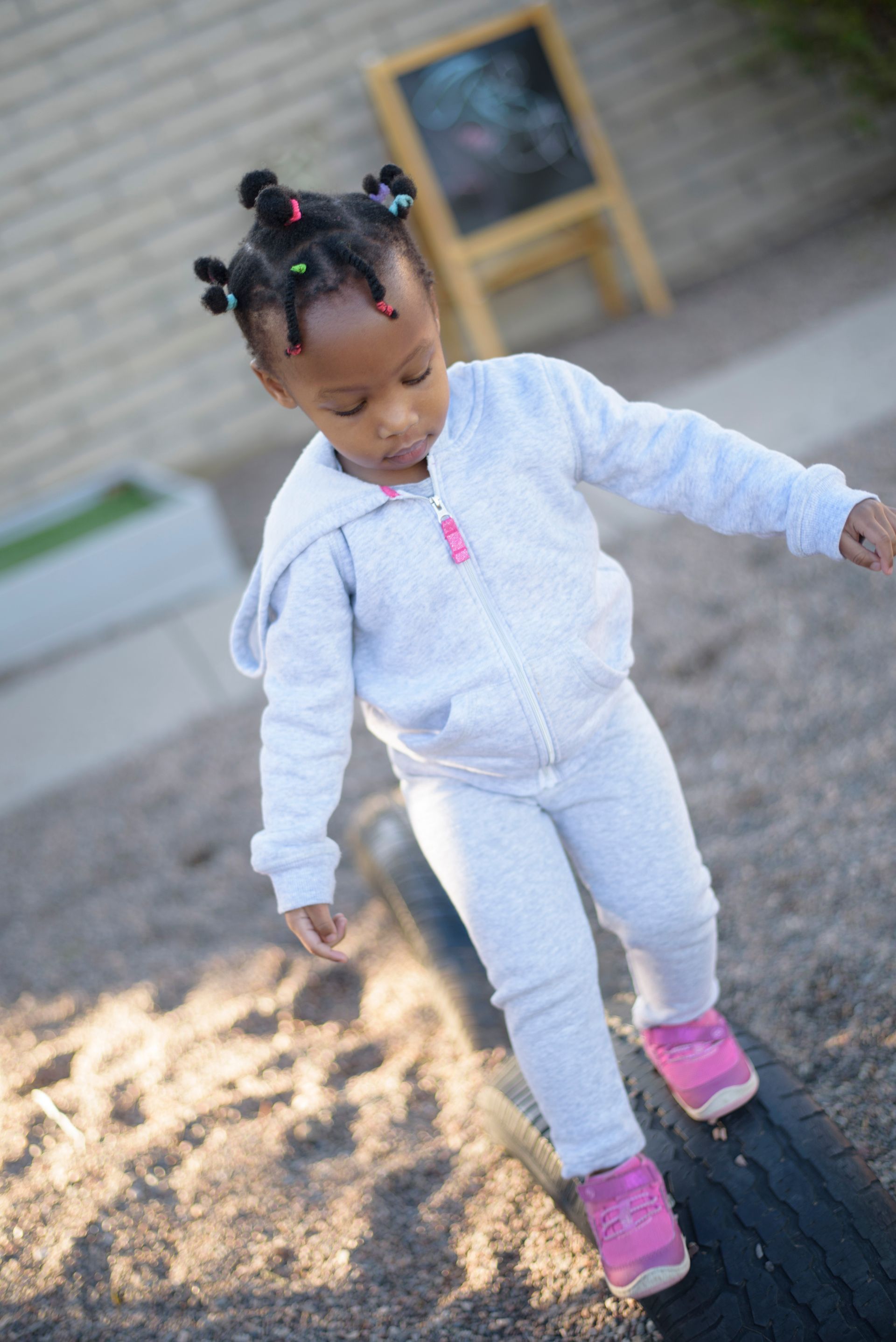
Discover how Montessori nurtures intrinsic motivation by replacing rewards and punishment with curiosity, confidence, and self-discipline.